
Cancer is a universal challenge that affects families in every country, every community, and every corner of the world. But while cancer touches everyone, so does hope.
By James Scongack
That’s why Canadians from coast-to-coast are coming together under the Canadian Nuclear Isotope Council’s (CNIC) Isotopes for Hope campaign to support access to life-saving medical isotopes for patients in Canada and around the world, offering a sense of hope to those living with hard-to-treat diseases like cancer.
The global impact of cancer is becoming even more evident, with the World Health Organization reporting that global cancer rates will reach 35 million cases annually by 2050. Behind these projections are patients and families facing the physical, emotional, and financial burden of cancer. While 2 in 5 Canadians will develop cancer in their lifetime, 100% of us will be impacted, whether it is a friend, family member, colleague, or ourselves.
As cancer rates rise, so does the urgent need for collaboration, technical advancements, and widespread access to leading treatments and diagnostic capabilities.
Over the past decades, significant progress has been made in cancer care and research. Among these advancements are medical isotopes, which have become an increasingly critical component of cancer therapy and diagnosis. While external radiation therapy has been a pillar of oncology for decades, today, specialized radioligand therapies and emerging radiotheranostics that leverage the power of medical isotopes allow clinicians to identify cancer in real time and precisely target tumours while leaving healthy tissue behind. Through these advancements, researchers, health professionals, and innovators are revolutionizing how we approach cancer care and offering a new sense of hope to patients globally.
Canada has been a world leader in medical isotope production for nearly a century. From early isotope production at Canada’s national research reactors at Chalk River in the 1940s, to the world’s first cancer treatment using Cobalt-60 in London, Ontario in 1951, Canada has played an important role in the development and production of medical isotopes, benefiting millions of patients worldwide.
Canada’s proud isotope story has helped our country develop one of the most advanced nuclear medicine ecosystems and associated supply chains in the world. By leveraging our world-class isotope production pipeline and clinical expertise, Canada continues to lead in isotope innovation and delivers several in-demand isotopes, such as Cobalt-60, Lutetium-177, Iodine-125 and many more.
Looking towards the future, the CNIC and its members, through the Isotopes for Hope campaign, set out an ambitious goal to double Canada’s isotope production by 2030 and rise to the challenge to lead the global fight against cancer. Significant work is underway to meet this goal, with increased isotope production on the horizon for critical isotopes that diagnose and target hard-to-treat cancers, increased investment across the supply chain, and growing government support at all levels.
Canada has also made significant headway on its global leadership by contributing to the International Atomic Energy Agency’s “Rays of Hope” initiative, which supports projects to expand access to cancer care and radiotherapy infrastructure in low- and middle-income countries. In September 2026, the CNIC formally announced Canada’s first official contribution to Rays of Hope by leveraging its network of private sector experts to deliver a training program to enhance professional capacity in Latin America.
While Canada has begun working towards its goal of doubling isotope production by 2030, leading the global fight against cancer, and improving patient outcomes, there is still more work to do.
As we mark World Cancer Research Day on September 24, Canadians have an opportunity to reflect not only on how far Canada has come in cancer research and medical isotope innovation but also on what we can do together to build on this legacy.
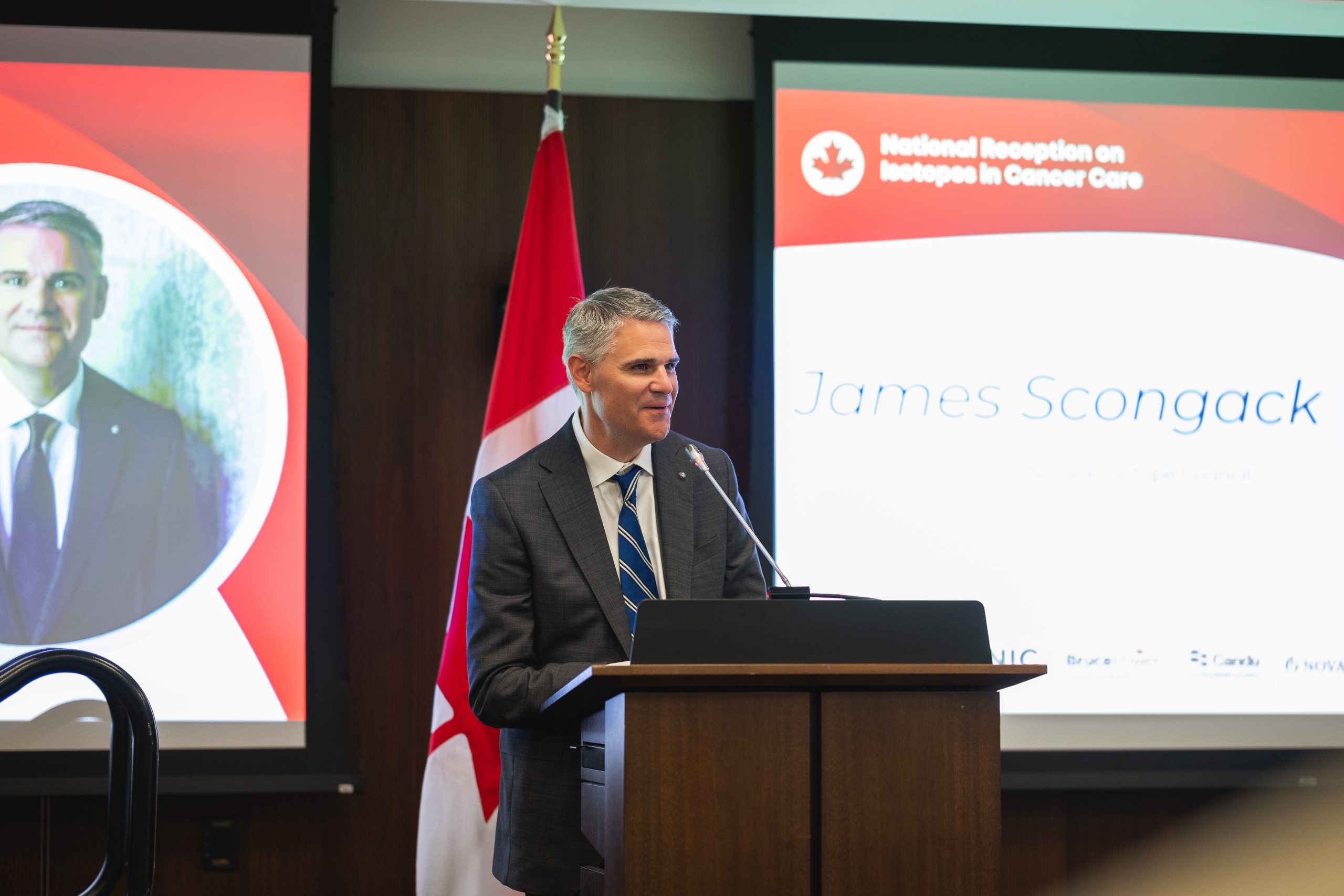
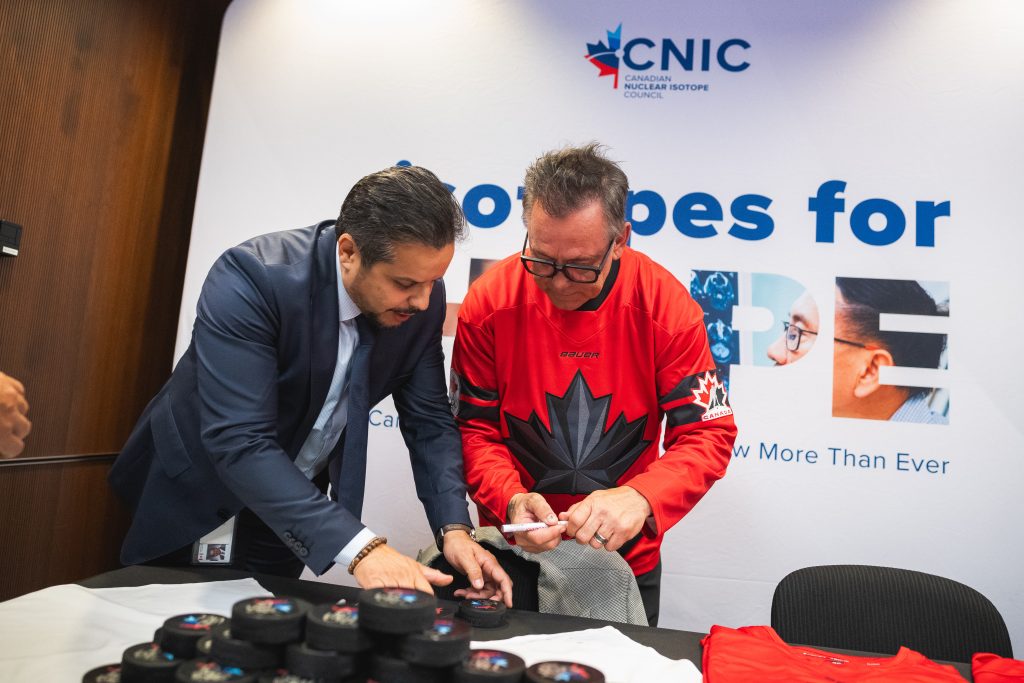
This spirit of collaboration was evident in Ottawa this week, when more than 150 Canadians and elected officials from across the country came together in recognition of World Cancer Research Day for an advocacy event co-hosted by the CNIC, the Pearson Centre, and the Honourable Karina Gould, Member of Parliament for Burlington. This event, “Canadians Against Cancer”, brought together government leaders and industry experts from across the entire medical isotope supply chain to raise awareness for the critical contributions Canada’s isotope community is making to global cancer care.
The gathering was a reminder of what is possible when Canadians come together to celebrate national pride and support sectors with growing domestic and global potential. This “Team Canada” approach will be essential as we build upon the decades of collaboration among isotope industry, government, and healthcare.
The Government of Canada has also taken significant steps to recognize the importance of this work and support this growing momentum. In June 2026, through the Nuclear Energy Strategy, the Government of Canada committed to the development of a comprehensive Radioisotope Strategy to support Canada’s isotope leadership for generations to come. By bringing industry, clinical, and academic leaders together, this Strategy will help align priorities across research, production, commercialization, workforce development, and supply chain resilience and lead Canada into the future of isotope innovation.
The opportunity presented for Canada through this timely Strategy also extends beyond cancer care. Currently, Canadian isotopes support industries representing over $770 billion of Canada’s GDP, with applications spanning agriculture, infrastructure, manufacturing, security, quantum technologies, and other emerging sectors. While nuclear medicine is one of the leading applications for isotopes in Canada, these additional sectors utilize isotopes to prevent insect-borne diseases, support mining operations, measure soil density, and ensure the safety of critical infrastructure and manufactured products, among other important uses.
With the Government of Canada aiming to grow Canada’s share of the global medical isotope market by at least 10% in the coming years, maintaining a strong, resilient isotope sector that supports all industries and innovation into the future is critical.
As global supply chains evolve and hegemons centralize their power, Canada has an opportunity to ensure that more value is created here at home, and that Canadian expertise and innovation continues to provide hope to patients and families globally. Canada’s isotope legacy has built something incredible that the world needs. The opportunity now is to build on this history, strengthen our domestic capabilities, increase our competitiveness, and build Canadian excellence from coast to coast.
No matter how much the world may change, patients will still need diagnostic scans and targeted cancer therapies. From healthcare and beyond, industries that provide strategic national value for Canada will continue to rely on access to Canadian-made isotopes.
The time is now for Canadians to lead the charge, lean into our proud past, and turn hope into action.

About the Canadian Nuclear Isotope Council:
The Canadian Nuclear Isotope Council (CNIC) is an independent, not-for-profit advocacy and member services organization. The CNIC supports over 130 members from across science, academia, healthcare, and nuclear-sector organizations dedicated to maintaining Canada’s position as a global leader in the production of life-saving isotopes.The Canadian Nuclear Isotope Council (CNIC) is an independent, not-for-profit advocacy and member services organization. The CNIC supports over 130 members from across science, academia, healthcare, and nuclear-sector organizations dedicated to maintaining Canada’s position as a global leader in the production of life-saving isotopes.